
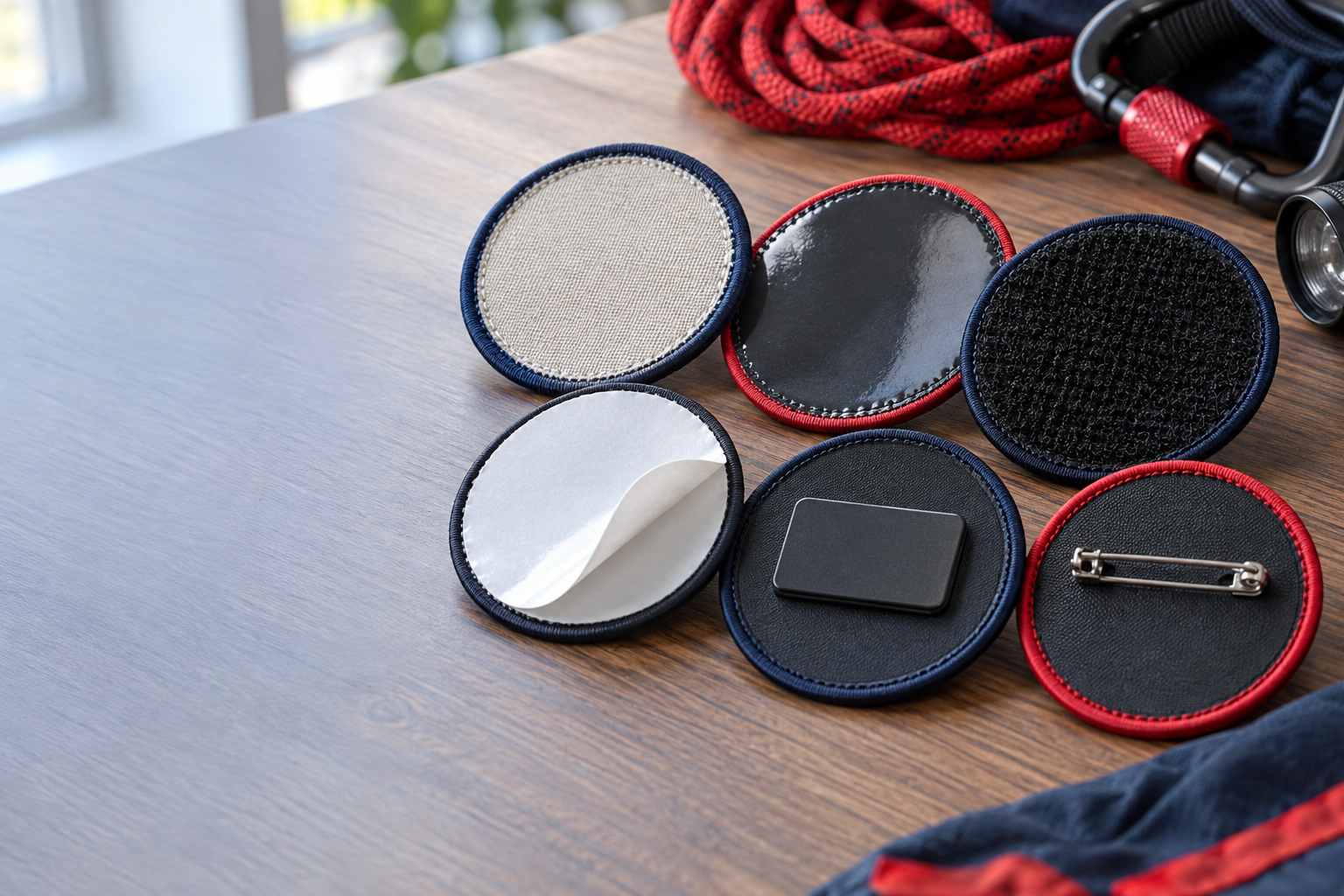
Custom PVC patches for Chicago rescue teams work best when the backing matches the garment and the size leaves enough room for readable identification. Use hook backing on an existing loop panel, or consider sew-on for a permanent placement the garment manufacturer permits. Start with the available space in inches—not a favorite patch diameter—and keep essential wording larger than decorative details.
GetUSAPatches handles quotes from Corona, CA, with a 10-piece minimum and a free digital mockup before production. We produce only after approval and ship to all 50 states across the United States. For a rescue-team order, the useful first details are the jacket or bag model, a placement photo, the quantity, and the date the patches must be in hand.
Start with the assignment, not the patch catalog
A rescue-team emblem may identify an organization, show a role, or simply mark a team equipment bag. Those are different jobs. A detailed anniversary crest can look right on a station jacket, while a field identifier usually benefits from fewer words and a larger, simpler symbol.
For a Chicago team moving between outdoor staging areas, vehicles, and indoor facilities, removable identification can be useful across seasonal layers. That does not mean every coat needs the same patch. A winter shell may have a generous sleeve panel, while a lightweight layer has only a narrow chest position.
- Organization identification: prioritize the approved team name and recognizable emblem, with secondary wording kept clearly subordinate.
- Role identification: use a separate, readable tab if roles change instead of ordering a new full crest for every assignment.
- Equipment identification: consider the bag’s handling, abrasion points, and cleaning method rather than copying a uniform specification.
- Commemorative use: allow more detail on station wear, presentation pieces, and off-duty garments where rapid recognition is not the main job.
A patch is identification, not protective equipment. Standard PVC construction does not establish flame resistance, high-visibility compliance, flotation suitability, or chemical resistance. Do not attach it to turnout gear, flotation equipment, harnesses, or other protective items without the appropriate garment or equipment approval.
The useful distinction is between an approved attachment area and a place that merely looks convenient. A blank space next to reflective trim is not automatically available. Keep required markings, closures, inspection labels, and equipment controls unobstructed.
Choose the backing around the actual garment
Backing is the first production choice to settle because it changes how the finished patch gets used. A good-looking face cannot fix the wrong attachment system. Our Patch Backing Options Explained: Sew-On, Iron-On, Velcro® & More guide covers the broader choices, but rescue-team orders usually begin with hook-backed versus permanent sew-on construction.
Hook backing for existing loop panels
Hook is the rough side; loop is the softer receiving side already fitted to many uniform sleeves and equipment bags. If the garment already has loop, specify hook backing on the patch. Asking only for Velcro backing leaves an avoidable question: do you need the patch side, both mating pieces, or a replacement receiving panel?
Keep the patch inside the usable panel boundary so exposed hook does not catch cuffs, knit layers, or nearby gear. Rounded panel corners matter, too. A rectangular patch can fit the listed width and height yet leave its corners unsupported on a heavily rounded panel.
Removability is the advantage, but hook-and-loop needs maintenance. Lint and grit reduce engagement, and an exposed corner can start peeling when it brushes a strap. The practical attachment checks in Velcro® Patches: How to Attach and Use Hook-and-Loop Backing apply to PVC faces as well.
Sew-on for permitted permanent placements
Sew-on makes sense when the identification should stay with a station jacket, work shirt, or nonprotective equipment bag. Ask about an appropriate recessed sewing channel so the installer has a defined stitching path. The channel and edge geometry should be part of the approved construction, not an assumption made after delivery.
Needle holes are the trade-off. Sewing through waterproof nylon shells can affect their water barrier, and sewing through a pocket can accidentally close it. An installer needs access to the back of the placement and must understand the garment construction before starting.
Why iron-on is not the default answer
Do not carry an iron-on specification from a cotton club shirt over to a coated nylon rescue jacket. Heat-sensitive fabrics, water-repellent finishes, and patch construction all change the result. Compatibility has to be confirmed for both the backing system and the exact garment.
Iron-on that peels after a dryer cycle is a familiar failure, but adding more heat is not a universal repair. It may damage the shell before it solves the bond. If the application depends on repeated washing or harsh handling, settle the approved attachment method before committing to the patch order.
Sizing custom PVC patches for Chicago rescue teams
There is no universal Chicago rescue-patch size. Your team’s uniform policy and the garment’s usable placement come first. A 3-inch round crest is a reasonable paper-test starting point for some sleeves, but that is not a specification to apply across every jacket in the locker.
Measure the smallest usable area across the garments receiving the same design. Record width and height even for a circle, and photograph the placement with a ruler in view. If two garment models have substantially different panels, two patch sizes may work better than one compromised version.
| Placement or use | Starting size to test | Likely backing choice | Main check before approval |
|---|---|---|---|
| Upper-sleeve team crest | About 3 inches round or 3 × 3.5 inches for a shield | Hook on an existing loop panel; sew-on only where permitted | Confirm panel corners, sleeve curvature, and readable team wording. |
| Chest role tab | About 3 × 1 inches or 4 × 1 inches | Hook for roles that may change | Check full support on the receiving panel and clearance from zippers. |
| Nonprotective equipment bag | About 3 × 2 inches or 4 × 2 inches | Hook or approved sew-on construction | Keep the patch away from carry-handle abrasion and frequent fold lines. |
| Cap front | About 2.5 × 1.5 inches | Attachment selected for the specific cap construction | Test crown curvature, center seams, and added stiffness. |
| Large jacket identifier | Start a paper test around 8 × 3 inches | Garment-specific removable or permanent construction | Compare weight, flex, snag exposure, and flatter material alternatives. |
These dimensions are layout examples, not department standards or promised fit. A wide 4-inch rectangle may bridge a curved sleeve poorly even when a 3.5-inch shield sits comfortably. Shape and placement work together.
Make a paper sample before making a mold
Cut the outline from paper at actual size and hold it against the garment. Put the garment on, bend the arm, and check it with the vest, radio strap, or backpack normally worn over it. A patch that disappears under a strap has not solved the identification problem.
View the printout from the distance where the wording needs to be recognized. There is no single letter-height rule that works for every font, contrast pair, and viewing condition. The Custom Patch Size Guide: How Big Should Your Patch Be? is a useful companion for comparing full-size outlines.
Build readable artwork and specify the relief
A molded PVC patch can use raised areas and recessed fields, but extra depth is not automatically better. Low relief often gives a cleaner, less bulky identifier. More sculpted relief can make a simple emblem stand out, while also adding surfaces that collect dirt and edges that may contact equipment.
Give the design one clear reading order: team or role first, emblem second, secondary location text last. Chicago, a founding year, a motto, and a full department name can compete for the same narrow border. If everything is equally important, everything becomes small.
- Use broad, open lettering instead of condensed decorative fonts for essential wording. Check counters inside letters such as A, B, and R.
- Keep small shapes separated enough to remain distinct in the proposed molded construction. Ask for an artwork feasibility review rather than assuming a universal minimum line width.
- Choose clear contrast between lettering and its immediate background. A dark emblem on a dark field may disappear before its dimensions become the problem.
- Provide color references, but review the agreed production color specification separately from a phone-screen preview.
- Specify ordinary color, any requested special material effect, and the intended use separately. Bright color alone is not retroreflective performance.
Vector artwork is helpful because outlines can be inspected and adjusted cleanly, but a readable PNG or JPG can still start the conversation. Include the best original file you have rather than a screenshot of a screenshot. The Artwork File Guide for Custom Patches: Vector, PNG, JPG and More explains what each file can support.
The free digital mockup confirms the proposed layout and specifications; it is not a physical test of flexibility, exact color appearance, or attachment strength. If those details determine acceptance, ask what physical sampling options are available and what they add to cost and schedule. Fixing small lettering before approval is much easier than trying to rescue it in a finished mold.
Different garments need different compromises
A patch specification should travel with the garment name, not just the team logo. The same crest can behave differently on a structured duty shirt, a fleece sleeve, and a thin rain shell. Fabric movement and attachment access matter as much as the artwork.
Nylon shells and fleece layers
For nylon shells, begin with any factory-installed loop panel or other approved attachment point. Do not assume an aftermarket sewn panel preserves the shell’s original weather performance. If the shell lacks an approved placement, changing the garment plan may be the better answer.
Fleece brings a different issue: loose fibers and soft fabric movement. Hook backing needs a proper receiving panel, not an improvised grip on the fleece itself. A large, relatively heavy patch on a soft sleeve can pull or curl the area even when the attachment initially feels secure.
Station jackets, wool coaches’ jackets, and presentation wear
The quote habits used for high-school sports teams and letterman jackets help here: check the lining, confirm access, and keep the patch scale in proportion to the garment. Wool coaches’ jackets and structured station jackets may carry permanent crests well, but the installer still needs to avoid stitching through an interior pocket or unsuitable lining.
PVC gives a molded surface, while merrowed crests give a familiar textile border. They are not interchangeable looks. For ceremonial or traditional uniform pieces, embroidered patches may fit the garment better than repeating the field patch material everywhere.
Caps, polos, and equipment bags
A cap’s curved front makes width and thickness noticeable quickly. A heavy crest can stiffen an unstructured crown, while a center seam can affect how the patch sits. Compare the proposed construction with the cap model before assuming the sleeve version can become a hat version.
Light hospitality polos show the same weight problem in another setting: a dense patch can drag lightweight knit out of shape. Equipment bags usually provide more structure, but they introduce abrasion, folding, and handle clearance. For caps, the Custom Hat Patches: How to Choose the Right Style for Caps and Beanies guide covers those placement trade-offs in more detail.
Compare PVC with embroidered, woven, and printed patches
PVC is a good candidate when the team wants a molded face that can usually be wiped clean after ordinary dirt exposure. It is not the right answer solely because the word rescue appears on the artwork. Fine lettering, garment weight, traditional appearance, and cleaning requirements can point to another construction.
For example, a small patch with a long organization name may work better in woven construction. A photograph or smooth gradient belongs in a printed discussion. Printed is flatter; that is the point.
| Patch type | Useful strength | Trade-off | Good comparison use |
|---|---|---|---|
| PVC | Molded shapes, raised details, and an easily wiped face for ordinary soil | Weight, thickness, and mold requirements need attention | Approved field-jacket panels and equipment identifiers |
| Embroidered | Traditional thread texture and familiar uniform appearance | Dense small lettering and complex fine detail may need simplification | Station crests, workwear, and presentation jackets |
| Woven | Finer textile detail with a relatively flat face | Less raised texture than embroidery and no molded relief | Longer names, compact logos, and lighter garments |
| Printed | Gradients, detailed images, and flat graphic reproduction | Different texture and wear considerations from molded PVC | Detailed artwork and larger, lighter visual identifiers |
Compare PVC patches, woven patches, and printed patches using the same dimensions and artwork. Otherwise, you are judging a large simplified sample against a small crowded one. The material should solve the actual design and garment problem.
Club orders offer another useful comparison. A biker vest can carry a large textile set that would feel bulky as one large molded piece, and a letterman jacket often calls for the soft volume of chenille rather than a wipe-clean face. The fuller decision guide is Embroidered vs. Woven vs. PVC Patches: Which Should You Choose?.
Prepare a quote-ready specification in six steps
The fastest useful quote starts with enough information to avoid guessing. You do not need a finished technical drawing. You do need to distinguish a team crest from a role tab, and a removable sleeve patch from a permanent bag label.
Use one representative garment for each different placement. If the order covers two jacket models and a cap, treat that as three fit checks even if all three pieces share the same logo. A single overall quantity does not explain those differences.
- Identify the garment and restrictions. Record the brand or model when available, fabric type, care label, existing attachment panel, and any manufacturer limits on modification.
- Measure the placement. Provide usable width and height in inches, note curved corners, and include a ruler in the photo so the drawing can be compared with the actual space.
- Test the shape at full size. Try a paper outline on the worn garment and check for interference from straps, zippers, pockets, and adjacent identification.
- State the backing precisely. Write hook backing for an existing loop panel, hook plus a separate mating loop piece, or sew-on with the proposed sewing-channel construction.
- Group the quantities correctly. List each artwork version, dimension, colorway, and role label separately, including replacements and any extras reserved for new members.
- Assign one approval contact. Have that person reconcile spelling, placement rules, and artwork changes before signing off on the final digital mockup.
Include your Chicago delivery ZIP code and the actual in-hand date, not just the date of a training weekend or ceremony. Receiving and distributing patches takes time after the carton arrives. If another shop will install them, include that shop’s required arrival date too.
For sewn installation, review How to Sew On a Patch: A Step-by-Step Guide alongside the garment instructions. A general sewing guide does not authorize modification of protective equipment. If installation needs specialist approval, resolve that before producing a permanent patch design.
Pricing, minimums, approval, and delivery to Chicago
GetUSAPatches has a 10-piece minimum. If the order includes several role labels, sizes, or colorways, ask how the minimum applies to each version rather than assuming ten mixed pieces count as one production run. Artwork variants can change tooling, setup, and the quote.
PVC pricing depends on the actual specification: dimensions, relief, detail, colors, backing, quantity, and any sampling or tooling requirements. Ask for the total in USD and a clear description of what it includes. An apparently lower unit price is not a useful comparison if backing or setup is listed elsewhere.
Budget around the complete set
Count issued positions, not just members. As an example, 24 members receiving two matching crests each need 48 crests before replacements; separate role tabs are another line item. That simple count prevents an attractive quote for 24 pieces from becoming the wrong order.
For budget math only, a hypothetical $300 delivered patch order divided across 50 pieces equals $6 per piece before any separate installation expense. That is an arithmetic example, not a GetUSAPatches price offer. Use the actual written quote and compare specifications line by line with How Much Do Custom Patches Cost? What Drives the Price.
Separate approval, production, and transit
We provide a free digital mockup before production and produce only after approval. Review the team name, dimensions, backing, edge construction, colors, relief, and quantities before approving. A late change to molded lettering or patch dimensions may require a revised quote and schedule.
Do not treat an initial artwork submission as the production start date. The schedule needs to account for artwork review, approval, manufacturing, any agreed sampling, and shipping. Ask for current timing against your exact specification instead of relying on a generic delivery estimate.
GetUSAPatches ships nationwide from Corona, CA, to Chicago and all 50 states. Confirm the shipping service, destination, and quoted arrival expectations separately from production time. For planning, Custom Patch Production Timeline: From Artwork to Delivery explains why each stage needs its own place on the calendar.
If your deadline is fixed, say so before the specification is finalized. Fewer artwork versions, prompt consolidated feedback, and an approved receiving address can remove avoidable delays, but they do not erase manufacturing or transit time. Keep a copy of the approved specification so a later reorder does not depend on memory.
Check the shipment, then keep the attachment working
Open the shipment before the issue date and compare it with the approved specification. Count each version, verify dimensions, and inspect spelling, edge shape, backing, and obvious defects. Test the fit on every garment model represented in the order rather than checking only the easiest one.
For hook-backed pieces, seat the full patch against a clean receiving panel and inspect the corners. Do a normal movement check with the garment and any routinely worn straps. If the patch overhangs or catches, investigate the fit before putting the full set into use.
- Follow both the garment’s care instructions and the confirmed patch-care guidance. The PVC face, attachment layer, and garment may tolerate different cleaning conditions.
- Remove detachable patches before washing when the relevant instructions call for it, and keep exposed hook away from vulnerable fabrics.
- Use mild cleaning methods for ordinary surface dirt only where approved. Avoid assuming solvents, disinfectants, or high heat are compatible.
- Use your organization’s established procedure for operational contamination. A visibly clean patch is not proof that it has been decontaminated.
- Store spare patches flat and record the approved dimensions, colors, backing, and artwork version for future orders.
Routine care is covered in How to Wash and Care for Patches (Embroidered, PVC, Leather & More). It is also worth checking the receiving panel during garment inspections; a sound patch cannot compensate for loose stitching or worn loop fabric underneath it.
The best finished specification is usually straightforward: readable artwork, an outline that fits, and an attachment method suited to the garment. Settle those three details first. The mold, quote, and reorder are easier to manage when nobody has to guess what the patch is supposed to do.