
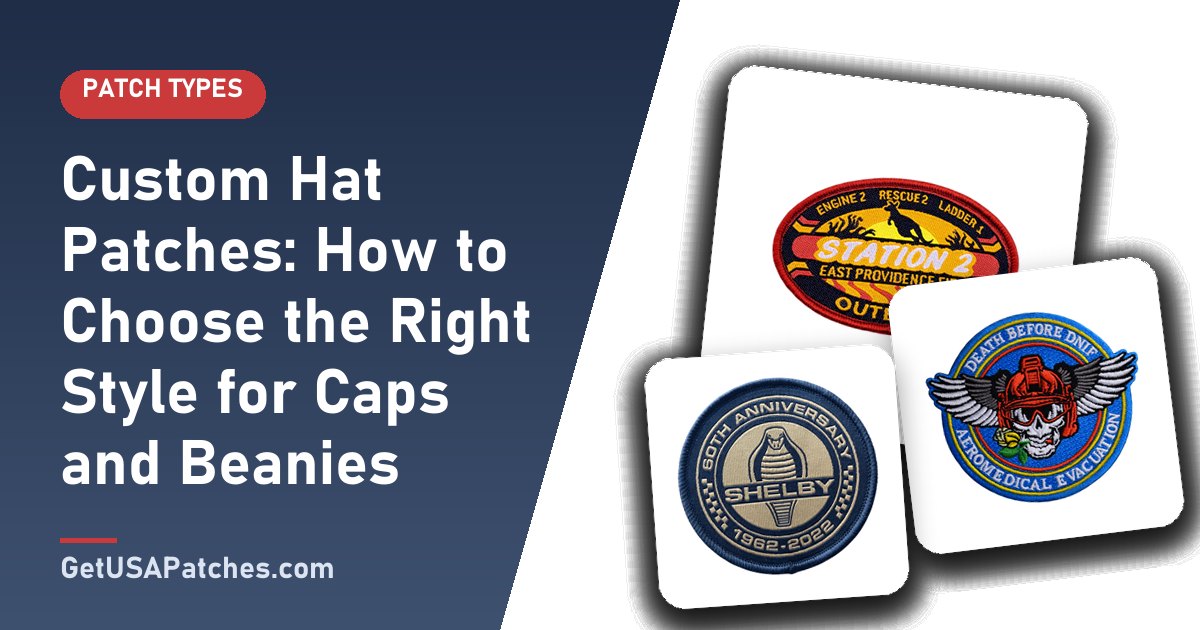
Hat patches are one of the most popular ways to brand headwear. The front panel of a cap is prime real estate, and the right patch makes a plain hat look like a product.
Here is how to choose.
Patch styles for hats
- Leather patches: premium, heritage look.
- 3D puff embroidery: raised lettering and bold logos.
- Woven patches: flat and detailed for refined brands.
- Embroidered patches: classic thread texture.
- PVC patches: durable, rubbery badges for outdoor caps.
| Style | Look | Best for |
|---|---|---|
| Leather | Premium, heritage | Dad hats, outdoor and craft brands |
| 3D puff | Raised, bold | Baseball caps, streetwear |
| Woven | Flat, detailed | Refined brand marks |
| Embroidered | Classic thread texture | Teams and general branding |
| PVC | Rubbery, waterproof | Outdoor and tactical caps |
Sizing for the cap front
Patches typically run about 2 to 3.5 inches wide, sized to the front panel. Curved surfaces make very wide patches hard to sit flat, so keep proportions modest. Our size guide lists typical ranges by placement.
Attachment methods
- Sewn on: the most durable for structured caps.
- Heat applied: possible for some patches and hat materials.
- Adhesive: temporary or decorative uses.
Design tips for hats
- Keep the logo simple and bold.
- Use high contrast between patch and hat colors.
- Avoid tiny lettering on curved panels.
- Consider raised 3D letters for standout impact.
GET A FREE MOCKUP
If you are still choosing type, size, or backing, send the artwork and the garment. Free digital mockup before production — 10-piece minimum. We do not produce until you approve.
GET A FREE MOCKUP
Ideas for hat programs
- Team and club caps.
- Employee or uniform hats.
- Brand merch drops.
- Outdoor and workwear brands.
Cap types and patch fit
- Structured 6-panel caps: flat front panel; good for larger patches.
- Unstructured “dad” hats: softer front; choose smaller or lighter patches.
- Trucker caps: foam front; consider sewing through the mesh-backed foam carefully.
- Beanies: knit stretches; choose lightweight patches and appropriate backing.
- Bucket hats: curved surfaces; keep the patch small.
Ordering checklist for hat brands
- Decide the hat type and front panel size.
- Pick the patch style and border.
- Choose a backing suitable for the hat material.
- Approve the mockup on a hat template if you have one.
- Order a small sample run first.
Styling tips
- Match patch colors to the hat’s embroidery or stitching for cohesion.
- Use dark patches on light hats and vice versa for contrast.
- Add a small woven label on the side or back for a premium detail.
GET A FREE MOCKUP
Ready to spec the run? Open the quote form for a free digital mockup and shipping to all 50 states after approval.
GET A FREE MOCKUP
Hat patch placement and design tips
- Center the patch on the front panel and check symmetry.
- Keep the design simple; caps are seen from a distance.
- Use contrast between the patch and the hat color.
- Consider a small secondary patch on the side or back for detail.
- Match thread colors to the hat’s stitching.
Hat patch materials compared
Leather patches read as premium and age well. Woven patches are smooth and sharp for detailed marks. 3D puff is bold and dimensional. Embroidered patches are classic and versatile. PVC is rugged and waterproof for outdoor caps.
Selling branded hats: what to know
- Choose a hat style customers love (structured, trucker, dad hat).
- Pick a patch style that matches your brand voice.
- Order a small sample run first.
- Photograph the hat on models and share the mockup.
- Reorder popular colorways as demand grows.