
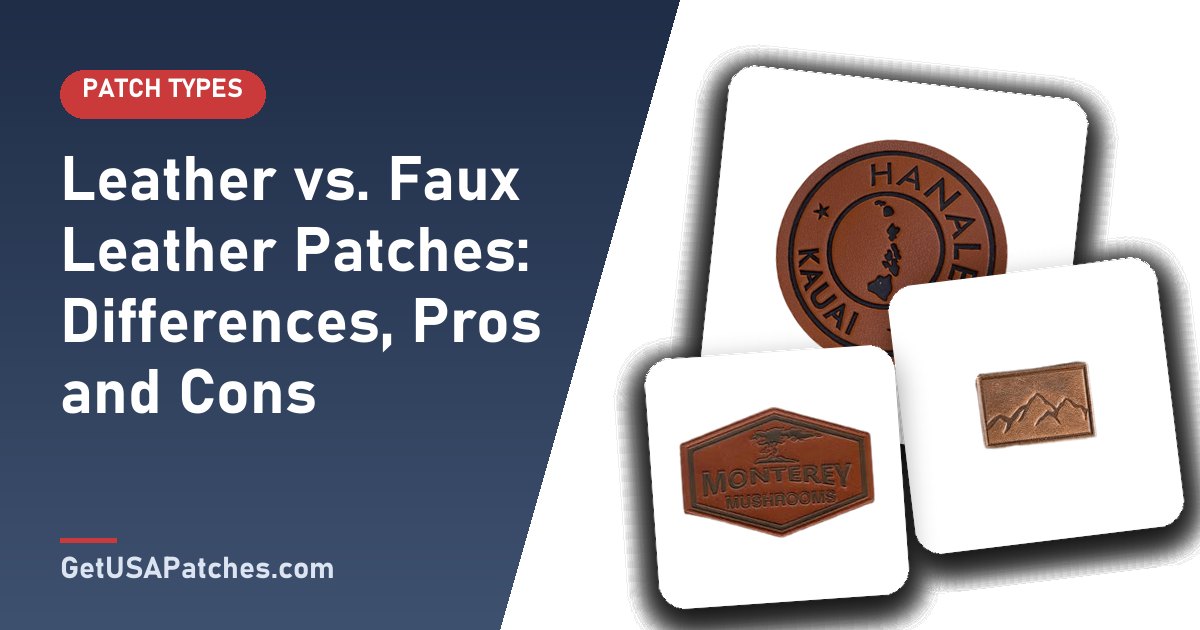
Leather patches bring a premium, heritage look to hats, bags, denim and apparel. The main decision is genuine leather or faux leather.
Here is how they compare.
Genuine leather patches
- Natural grain and texture that varies slightly patch to patch.
- Develops character and patina over time.
- Traditional look for heritage brands.
Faux (synthetic) leather patches
- Consistent appearance from patch to patch.
- A vegan-friendly alternative.
- Available in a wide range of colors and finishes.
- Quality varies by material, so ask about the specific type.
How the logo is applied
- Debossed: pressed into the surface for a subtle, classic look.
- Embossed: raised from the surface.
- Laser-engraved: burned into the surface for crisp detail.
- Foil or ink accents: add color to the design.
| Feature | Genuine leather | Faux leather |
|---|---|---|
| Look | Natural grain, varies | Consistent, uniform |
| Aging | Develops patina | Stays consistent |
| Colors | Natural tones, dyed options | Wide range of colors |
| Ethics | Animal-derived | Vegan-friendly |
| Logo methods | Deboss, emboss, engrave | Deboss, emboss, engrave |
| Best for | Heritage, premium brands | Consistency and color range |
Which should you choose?
- Choose genuine leather for a natural, heritage feel.
- Choose faux leather for consistency, color range or animal-free products.
- Keep logos simple — leather favors bold shapes over tiny detail.
- Ask us for a mockup in both if you are undecided.
GET A FREE MOCKUP
If you are still choosing type, size, or backing, send the artwork and the garment. Free digital mockup before production — 10-piece minimum. We do not produce until you approve.
GET A FREE MOCKUP
Care tips
- Avoid soaking leather patches.
- Wipe gently with a damp cloth.
- Keep away from high heat.
- Condition genuine leather occasionally if it dries out.
Design tips for leather patches
- Use bold shapes and thick lines — thin lines can fill in.
- Keep text short and large.
- Choose a single-color logo for deboss; add foil or ink for color.
- Leave a margin around the artwork for a clean edge.
Attachment options
- Sewn on: most durable; use a leather needle for thick patches.
- Adhesive: suitable for temporary or display uses.
- Rivets or eyelets: possible for some products; ask us.
Where leather patches shine
- Dad hats and beanies.
- Denim jeans and jackets (waistband and pocket labels).
- Tote bags and backpacks.
- Candles, gift boxes and packaging accents.
GET A FREE MOCKUP
Ready to spec the run? Open the quote form for a free digital mockup and shipping to all 50 states after approval.
GET A FREE MOCKUP
Buying guide: what to ask about leather patches
- Is the material genuine leather or faux (PU/vegan) leather?
- What thickness is the patch?
- How is the logo applied (deboss, emboss, engrave)?
- What colors or foils are available?
- How should the patch be attached to my item?
Design guidelines for leather
- Keep artwork bold; hairline details fill in when pressed.
- Use a single-color logo for deboss and add foil for contrast.
- Leave a clear border of blank leather for a clean edge.
- Avoid gradients — leather reproduces solid shapes.
Common uses for leather patches
- Caps and beanies.
- Jeans and jackets.
- Bags, wallets and leather goods.
- Gift packaging and candles.
- Furniture and craft products.