
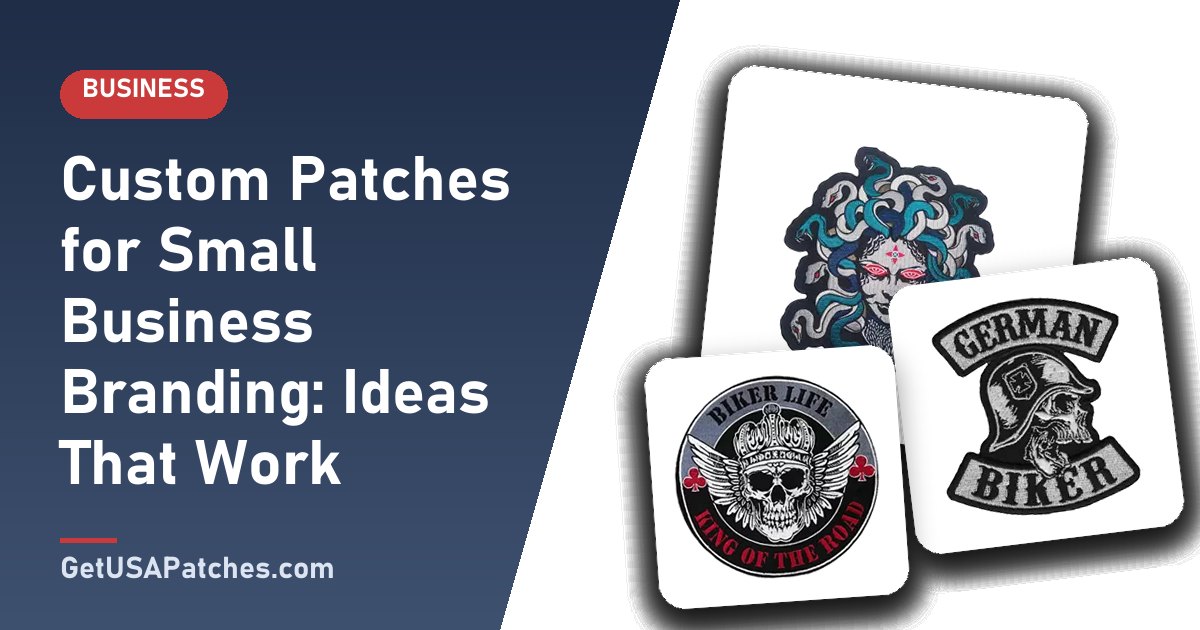
For a small business, a patch is a small, durable billboard. It goes on a hat, a work jacket or a tote bag and travels wherever your customers and team go.
Here is how small businesses across the United States use patches — and how to get started.
Where to use patches in your business
- Uniforms and workwear: polos, jackets, aprons and caps for your team.
- Merchandise: hats, hoodies, totes and backpacks.
- Packaging and gifting: small patches as thank-you items.
- Events and pop-ups: limited-run designs to drive buzz.
- Customer rewards: loyalty or referral gifts.
Best patch types for business branding
- Logo patches for exact brand reproduction.
- Embroidered patches for a classic, premium feel.
- Woven patches for detailed marks and apparel labels.
- Leather patches for a heritage or artisan look.
- PVC patches for outdoor and durable gear.
| Business use | Best patch type | Why |
|---|---|---|
| Staff uniforms | Embroidered or woven logo | Durable and professional |
| Branded hats | Leather, 3D puff or woven | Premium, visible logo |
| Merch (hoodies, tote bags) | Embroidered, chenille or PVC | Texture and standout |
| Product labels | Woven | Fine detail, smooth finish |
| Outdoor / trade gear | PVC | Waterproof, easy to clean |
Tips for consistent branding
- Use the same brand colors across every patch.
- Keep a consistent placement, such as left chest or hat front.
- Order a size that matches your logo’s proportions.
- Save your approved mockup as a reference for reorders.
Start small, then scale
Orders have a 10-piece minimum, so you can test a design on a small batch before placing a larger order. Once you are happy with the result, use our bulk order guide to plan a bigger run.
GET A FREE MOCKUP
If you are still choosing type, size, or backing, send the artwork and the garment. Free digital mockup before production — 10-piece minimum. We do not produce until you approve.
GET A FREE MOCKUP
Why patches beat printed logos
- They are durable and can be removed or swapped.
- Texture adds a premium look.
- They stay sharp through washing when applied correctly.
A 30-day plan to launch a patch program
- Week 1: decide the use case (uniforms, hats or merch) and pick a patch type.
- Week 2: send your logo and request a free digital mockup; approve size, colors and backing.
- Week 3: order a small first batch to test on real garments.
- Week 4: roll out to staff or launch as merch and collect feedback for a larger reorder.
How patches build brand recognition
- Consistent placement (for example left chest) trains customers to recognize you.
- Patches survive washing better than many printed logos.
- Texture signals quality and care.
- Patches are noticeable in photos, which supports social sharing.
Marketing ideas using patches
- Give a free patch with every purchase over a set amount.
- Create a limited seasonal design for repeat customers.
- Send patches to loyal customers or influencers.
- Partner with local clubs and teams for co-branded patches.
GET A FREE MOCKUP
Ready to spec the run? Open the quote form for a free digital mockup and shipping to all 50 states after approval.
GET A FREE MOCKUP
Case-style examples: how different businesses use patches
- Coffee shop: embroidered logo on aprons and woven labels on tote bags sold at the counter.
- Landscaping company: PVC patches on jackets and caps for a rugged, weatherproof look.
- Boutique clothing brand: leather patches on hats and chenille on limited hoodies.
- Auto repair shop: nametags and logo patches on work shirts.
- Craft brewery: patches as merchandise and taproom giveaways.
Choosing colors and shapes that fit your brand
- Start with your primary brand color and one contrasting color.
- Choose a shape that echoes your logo (circle, shield, rectangle).
- Keep the border color consistent across products.
- Test the design at small sizes to make sure it stays legible.
Measuring the ROI of branded patches
Track how patches are used: staff compliments, social shares, merchandise sell-through and repeat orders. Even simple metrics — patches sold per month or customer requests — show whether patches strengthen your brand and can guide your next order size.